
Alternate Business Ideas For Crafters
This page is here to show you other ways that creative people (crafters) can either run a second business for a side income or stop crafting completely and start a new company that is still creative.

I will list some great ideas for you to try as a second stream of income in your life.
See below
Oh! Just in case you never knew……….
This page is part of a series of pages all related to things you need to know, as an overall view, of how to run a successful crafting business.
If you have not yet been to the “home” page of this series of pages, please use this link and go to the page I have called Read This First.

Do it right, and you can double your income


What is the point of doing “crafting” another way?
Artists and crafters often find themselves wanting to explore additional income streams or launch entirely new ventures that still honor their creative passions and talents.
This website represents my personal journey away from the craft market circuit. While I once cherished attending these markets, a growing list of challenges made them increasingly difficult to manage. Eventually, I decided to channel my skills in a different direction.
Do I have fond memories of the markets? Absolutely.
Do I miss the relentless cycle of creating inventory, managing stock, setting up booths, and packing everything away? Not at all.
Here, you’ll discover numerous alternative business models that could potentially transform your creative career and life.
Important note: While I could develop comprehensive courses covering each business option in detail, that’s not the purpose of this page. My goal is simply to introduce you to the possibilities available.
However, if I receive significant interest from readers asking me to expand on these business concepts, I’ll gladly create either complete courses (which happen to be one of the business types I’ll discuss) or produce detailed blog posts and videos exploring these opportunities further.
Some Alternate Business Ideas for Crafters and Artists.
Please note that I have literally just listed these out of my head.
There are probably another 50 more that I have forgotten about.
If you want me to explore one that you heard about, let me know, and I will do so for you.
Crafting books
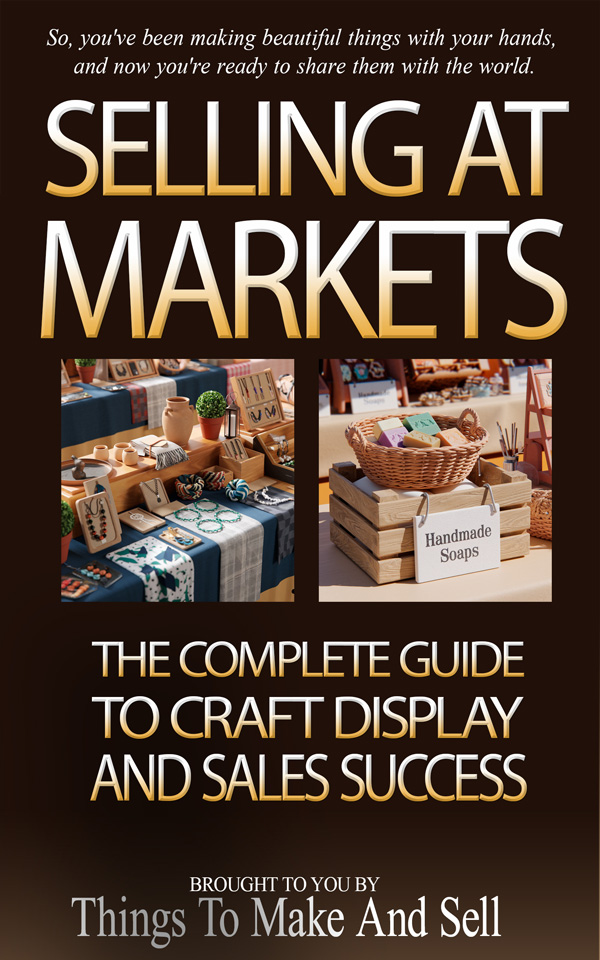
If you have skills that people would pay to learn from you, you have the potential to sell PDF or Kindle books to people who need that information.
Because I have been crafting for 40 years and have been doing online marketing full-time for the last 17 years, it means that I have a wealth of information that I incorporate into the books I sell right here on this website.
Your book can be extremely niche, focusing on a step-by-step method for a specific task. At $5 or even at $55, people will buy that book from you.
Affiliate marketing for crafters
This might be the easiest business for anyone to start.
You do your research into which (creative?) market you wish to set up as an affiliate.
You buy a domain, you get me to set up your WordPress website for free
You make a landing page or two.
You run some social media videos or banner ads.
You make money.
If you click on my blog posts, you will then see all the affiliate ads I run on this website.
Printables for crafters
Um, I apologise for the fact that this business idea is almost 100% the same as the one above and the print-on-demand one.
You create images, graphics, cheat sheets, workbooks, colouring-in books, step-by-step stuff and more.
You then sell it on any of the dozens of places, like Etsy.
Running Craft shows
In my opinion, there are far too many craft shows and markets these days.
However, having said that, if you did some research, there is a 100% certainty that you could find massive holes where you could add a market section to any massive event that has tons of people but doesn’t have a craft section.
Or you could create and run a totally new style of market.
My ADHD brain is already finding dozens of possible ideas for this idea.
Let me give you one idea…
You contact a local farmer who has a corn field at the end of summer. You cut 4 mazes into his fields. You then set up a market. Run it from a Thursday night until sundown on a Sunday.
Add a funfair. Add food trucks. Add a beer garden. Add a petting zoo. Add camel rides. Add a small stage and some bands, or allow buskers in for free. Have demonstrations of fun things. Have a child-minding section. Arrange all this long before it happens. Allow booking from vendors to be cheap, just to cover your costs. Have a camping area. market the whole thing like crazy. DO NOT call it a craft market, not a country fair. make up a new name and go mad with that.
If this idea daunts you, go in with 4 friends or 9 other vendors.
Many years ago, I was a vendor at a medieval market. It was different, it was new, there was even jousting and other things, and we sold so much stock. Everybody had fun.
Just a comment on this idea… If you do any type of first-time market, make it a success off the bat, or it will not survive into a second year.

Crafting directories.
I think that the potential for this business model is so good that I have to stop my ADHD brain from starting one every day.
WordPress offers plugins and themes that make launching a directory business remarkably straightforward from a technical standpoint.
The real challenge comes with actually building momentum and growing the platform.
Every crafter and artist benefits from being listed in multiple directories, particularly those designed specifically for creative businesses. The exposure can lead to increased visibility and potential customers discovering their work.
Many directories automatically include your business in their listings without permission, then send you emails asking you to “verify” or “claim” your profile.
However, the main hurdle lies in convincing crafters to actually join and maintain active profiles on your directory. While they would gain valuable exposure and potentially receive referral traffic over time, getting that initial participation proves difficult.
The key to success is creating a directory that becomes both well-populated with engaged crafters and highly ranked in search engines, including the newer AI-powered search platforms. When those elements align, you have the foundation for a genuinely valuable business.
My current thinking leans toward highly specialised, niche-focused directories rather than broad, general ones. For instance, a directory exclusively for jewellery makers or one dedicated solely to painters might perform better than a catch-all crafters directory.
Though I should mention this is still an evolving thought process on my part, so my perspective might shift as I consider it further.

Crafting membership sites.

A crafting membership website creates recurring revenue by providing exclusive content, tutorials, patterns, and community access to paying subscribers. This model works particularly well for experienced crafters who can teach others while building a sustainable income stream that doesn’t depend on constantly creating physical inventory.
The beauty of membership sites lies in their predictable monthly revenue. Instead of the feast-or-famine cycle that many crafters experience with markets or one-off sales, you’re building a base of subscribers who pay regularly for ongoing value. Members might receive new patterns each month, access to video tutorials, live crafting sessions, or entry to a private community where they can share projects and get feedback.
Content creation becomes your primary focus rather than physical production. You could offer everything from beginner tutorials to advanced techniques, seasonal projects, or specialized skills within your craft. Some successful membership sites provide downloadable patterns, while others focus on video instruction or even monthly craft supply boxes shipped to members.
The key to success lies in consistently delivering value that justifies the monthly fee. This means understanding your audience’s skill level and interests, maintaining a regular content schedule, and fostering an engaged community. Many crafters find this model more sustainable than traditional selling because it leverages their expertise rather than their time spent making individual items.
Starting small with a focused niche often works better than trying to appeal to all crafters. Whether you specialize in quilting, jewelry making, or paper crafts, a dedicated audience willing to pay for quality instruction and community can provide substantial ongoing income.
Print On Demand Crafting Style
Creating designs for print-on-demand can be extremely rewarding and very profitable.
While I agree that you need to set up this business correctly, it has almost unlimited potential. Yet, sticking to the big items (T-Shirts and mugs) will almost guarantee success.
The best part is that you do not even need to create your own designs. There are thousands that you can use legally on some of these sites.
https://workfromhomemembership.com/creativefabrica
https://workfromhomemembership.com/designious
https://workfromhomemembership.com/vexels
I always suggest conducting thorough market research before settling on any particular niche for your design business. See the craft research page for more research help – Craft Research
Understanding the level of demand for your chosen product category will provide valuable insights that can guide your business decisions.
Crafting Podcast
If you enjoy communicating, creating a successful podcast might be the business that you are looking for.
I have run a podcast series in the past and even had fair success with it, but I have to say that I am not skilled enough to show you how to do podcasting.
But do not let my lack of experience put you off this potentially life-changing business model. Do some research into this idea.
I would like to add that you could combine this podcast idea with a second business model and use the one to promote the second business.
Crafting “influencer” (IE news and events)
You can do this across multiple platforms, or just on a few like YouTube or Instagram.
You can do it “faceless” or anyway that you like.
If you choose to feature topics that are trending or are simply popular, your business will flourish.
Just like any of these business ideas, research is everything.

Art or graphic designs for crafters
Scroll up and click on those links that I added to the print-on-demand section.
ALL of those will have great examples of what you could create and resell to people as digital downloads.
If you are an artist, then you can sell copies of your art as prints. There are dozens of courses online on how to sell art.
Creating graphics for businesses and people who need content for their niche is such a massive market that you will never run out of places and people to sell your work to.
Website and SEO for crafters.
I have been doing this successfully for the last 17 years. Ok, a little less for the last 7 years.
This is easy work to do, easy enough to learn. AI can handle 80% of the work these days.
If you are really serious about setting this up, I suggest booking me for a 1-hour meeting, so I can help you see which end of it all will fit your skills.
To be very honest, see what I say below about directories and online craft markets before you get involved with 20 monthly clients who tend to message you at 4 AM.

Crafting courses
There are many ways that you could create courses that relate to creative products or skills.
There are also just as many platforms that will allow you to sell your course or courses.
You could do it as a booklet or a full book. You could do it as a video course.
You could do it as a membership site.
This is my main comment on this topic.
People want courses that they can consume quickly. Stupid quickly. We live in an age of video shorts, and sadly, everybody thinks that a 5-minute video can teach them a new business model.
I have to be honest here. If you have ever watched any of my videos, you will see that I never have short videos. It is impossible for me to even think about those short videos.
I grew up in a world where you took a 3 to 4-year course to learn how to start and run a business.
Think about it this way… If you had a business partner, would you prefer that they learned your business in a 3-page cheat sheet or a 250-page step-by-step book?
Sorry about the ranting.
I do have courses. LOL (In fact, at one stage I had 400 videos covering at least 15 courses)
Crafting marketplaces – online platforms and physical stores
An online crafting marketplace functions similarly to a directory but includes e-commerce capabilities, allowing businesses to process orders directly through the platform. This model mirrors what Etsy has accomplished in the broader market.
Following the same logic I mentioned for directories, I would focus on highly specialised niches if pursuing this business model.
Your sellers have much better chances of achieving strong search engine rankings when competing within a smaller, focused market segment.
Alternatively, you could scale up quickly by investing in effective advertising campaigns, though this requires more capital and risk.
Another approach involves creating a locally-focused crafting marketplace, which would essentially function as a digital gift shop for your area.
This strategy relies heavily on local search optimisation and maintaining a robust Google Business profile to attract nearby customers.
A local platform supporting 20 to 30 active crafters and artists in your region could prove quite profitable.
You’d also have the opportunity to feature and sell your own creations alongside other makers’ products.
Once you’ve built a solid foundation with local artisans and established customer demand, expanding into a physical retail location becomes a natural next step with significantly reduced risk.


FAQ
Is starting an alternate crafting business a good idea ?
The answer depends largely on your current situation and long-term goals. If you’re feeling burned out from the traditional craft market circuit or struggling with the physical demands of constantly creating inventory, then exploring alternative business models could be exactly what you need. These alternatives often provide more predictable income, better work-life balance, and the opportunity to leverage your expertise rather than just your production capacity.
However, transitioning to an alternative business model isn’t automatically easier than what you’re currently doing. Each approach comes with its own learning curve and challenges. Building a membership site requires content creation skills and marketing knowledge. Running a directory demands technical understanding and the ability to attract both sellers and buyers. Teaching crafting courses means developing instructional abilities alongside your creative talents.
The biggest advantage of alternative crafting businesses is their potential for scalability and passive income. Instead of trading time directly for money through individual sales, you can create systems that generate revenue while you sleep. A successful online course can sell hundreds of times without requiring additional production work, and a thriving membership site provides recurring monthly income.
Consider your existing skills and interests when choosing an alternative path. If you enjoy teaching and connecting with other crafters, educational models might suit you. If you’re more business-minded and see gaps in the market, platforms and directories could be appealing. The key is matching the business model to your strengths and preferred working style rather than simply chasing what seems most profitable.
How will I know which is the best alternate craft business for me ?
Choosing the right alternative crafting business starts with honest self-assessment of your strengths, interests, and resources. Consider whether you’re naturally drawn to teaching others, building communities, creating content, or developing business systems. If you love explaining techniques and helping people improve their skills, crafting courses or membership sites might align perfectly with your personality. If you’re more behind-the-scenes and enjoy organizing or curating, directories or affiliate marketing could be better fits.
Your existing skill set plays a crucial role in determining your best path forward. Those comfortable with technology and websites might gravitate toward print-on-demand services, SEO consulting, or online stores. Creative types who excel at design work could find success with printables or graphic design services. If you’re naturally outgoing and enjoy networking, running craft shows or building an influencer presence through podcasts might leverage your social strengths.
Consider your available time and financial resources as well. Some options like affiliate marketing or printables require minimal upfront investment but take time to build momentum. Others, like physical crafting stores or large-scale craft shows, need significant capital but can generate revenue more quickly. Membership sites and courses fall somewhere in between, requiring content creation time but offering recurring income potential.
Think about your long-term vision and lifestyle goals. Do you want passive income that eventually runs itself, or do you thrive on active daily engagement with customers and community? Are you looking to completely replace your current income or just supplement it? Some models like books or printables can become largely passive once created, while others like podcasting or influencer work require consistent ongoing effort.
The best approach often involves testing small before committing fully. You might start with printables while exploring affiliate marketing, or begin writing a crafting book while developing course content. Many successful alternative craft businesses actually combine multiple models, such as running a membership site that also offers courses and affiliate recommendations.
Which one of these business types is most likely to succeed financially ?
Our Blog

Why Starting Your Craft Business at Home Could Be Your Biggest Mistake Ever
When you're passionate about crafting and dreaming of turning your hobby into a profitable business, working from home seems like the obvious choice. After all, you already have your supplies, a workspace, and zero commute time. But before you dive headfirst into your...

The Wooden Chopping Board Niche
Wooden Chopping Board NicheThis page is here to help you get the best advice on the niche - Wooden Chopping Boards. The idea is that I show you how viable the niche is, and give tips and keyword numbers that will set you on the best path to craft-making success. What...
Email Marketing for Handmade Crafts: A Complete Guide
Email Marketing for Handmade Crafts. As a handmade crafter, you pour your heart and soul into creating unique, beautiful items. But getting your creations into the hands of people who will treasure them can be challenging. Enter email marketing—one of the most...
Subscribe for Weekly Deals

