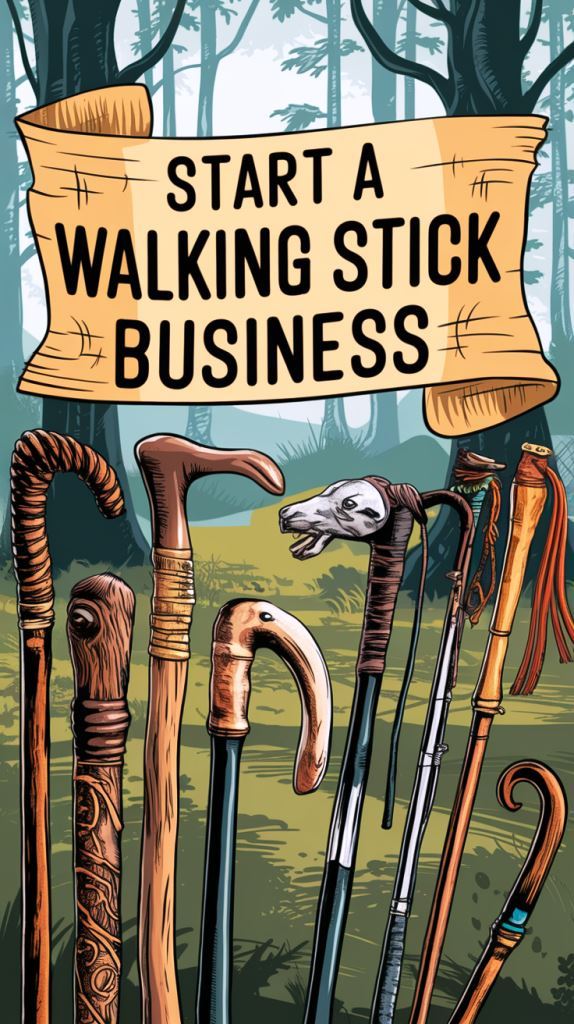
I’ve researched the Walking Sticks niche for you.
It’s really simple. I did detailed research into walking sticks as a manufacturing product, so you can make an informed decision when thinking of a new item for your business.

Please go through all the details here below so you can see what my research results were for walking sticks.
I have added some detail at the bottom of the page on steps you need to take to get a business started from scratch if you are brand new to this business idea.

My Overall Result? YES! This is a viable niche Idea.
The niche divides into a few clearly and quite different sub-niches and I would suggest that you stick to just one when you get started.
These would be
- Walking sticks for older people
- Walking sticks for women
- Serious trekking or hiking sticks
- Handmade (crafty) walking sticks.
Then there is How you choose to do your marketing.
- Ranking keywords on a website is the best option.
- You could just use social media to market your products too.
- You could stick to places Like Etsy.
- Then there is local marketing.
- Don’t forget wholesaling.
- And finally paid ads might be a viable option.

Let me go through this in a bit more detail for you.
Before I start – you might be very new to online marketing, so this tells you what KEYWORDS ARE ALL ABOUT.
Keywords are a string of words that people put into Google when they are looking up a topic or have any sort of search query.
Those “words” that they enter into the Google search bar and called keywords.
I do my research focus on keywords, meaning I look to see what people are looking for (and how many people too) in relation to a product or niche.
My overall impression.
The positive stuff.
This is a great niche with a lot of potentials and I hope to point out to you some of the potential issues you need to consider before going all out on this product option.
The keyword results alone tell me that this is worth pursuing, but I have a few comments.
Hand-made walking sticks VS serious trekking and hiking styles poles and then VS mass-produced (standard) walking sticks are all worth doing, but I do not suggest that you try to chase all the potential buyers until each section (sub-niche) is well established in your marketing.
The negative stuff.
While there is a ton of search intent for this product and all its variations, it comes down to one really big issue for me that I would have to do in detail before I start to make the walking sticks I had in mind to manufacture as a business.
That issue is time VS money.
IE Profitability. If you can make these fast enough and still be a great quality for a decent profit margin, then I say – go for it.
I would do careful research into my selling points and the time taken and costs involved before I take it all seriously.
This would be (in my case) that I would make 20 or so sample items. Put them all online so they could be sold, and then run an advert to see if they sell well enough to keep on testing the niche.
Core keywords.
More than 300 000 monthly searches for a wide variety of keywords is what makes this niche a good option.
You will probably find that with all the walking stick variations and long-tailed keywords that there are likely to be over 500 000 monthly searches for this product.
Closely related keywords.
This is important to know.
This is not just a single keyword group, and you get a few closely related keyword groups.
Trekking and hiking keywords.
Traditional (functional) keywords for older people and blind people.
Hand-made keywords.
Question keywords.
This section gave up a bit of information, with enough keywords to give you some great long-tailed content material, but didn’t give any massive revelations. See the last section for how to get these keywords.
Long-tailed keywords.
As you would expect when you get quite a lot of keyword searches and a few closely related keyword groups, you are going to get a ton of long-tailed keyword results.
I love this. This is my lazy way of using content to get buyers and at the same time start to get Google to rank me for bigger and bigger keywords as my site matures.
KGR keywords.
“Keyword Golden ratio” keywords are really just keywords that have a fair amount of searches, are generally long-tailed keywords and have little to no competition for that exact keyword from opposition websites.
This means that those “KGR” keywords are far more likely to rank on page one, even if your website is new or small.
For walking sticks and related keywords, I found some KGR keywords really easily. This would mean that I probably could find at least 100 other KGR keywords that do not have a ton of competition.
This is a really good thing!!!
Keyword difficulty.
This is one of those how long is a piece of string type sections.
When I tell you that the keyword difficulty for this niche is relatively easy for almost all the keywords, it is true only if you are going to be creating content on an almost daily basis. Then you might still need to wait up to 6 months for all that work to start getting you traffic.
So, my short answer is this…
The top 10 keywords are relatively difficult to rank for, but not impossible by far. It could be done by anyone who puts in the hours.
Most of the rest of the top keywords would be relatively easy to rank for – especially if your website grows to over 30 pages and you post often, and your social media marketing is active.
Finally, the long-tailed and KGR keywords look like they will be easy to rank for.
Shopping Button.
In my research, this was only worth looking into to see what others are manufacturing (Ideas) and what prices they are putting the products up at.
It did, however, tell me that there were a lot of products and a lot of interest.
So, a positive result.
Product images.
See the answer above. This was great for a ton of cool ideas.
Local search.
This side of marketing seems to be wide open.
My research results when I did local searches served up all the big-box stores. This told me that Google did not have a lot of optimised Google Business Profiles set up to suck in all the search results from your local area.
Short answer – Very much wide open and should be easy to rank for.
Google trends.
My research into this shows that it is an evergreen niche. There were just the normal monthly ups and downs, but over all a strong consistency for the keyword.
Etsy.
This research result was very positive.
There were a lot of products (not too serious if you know how to get Etsy rankings)
The prices were higher than I was expecting which meant that people were paying the prices. That is great to see.
All good news.
Amazon.
The amazon research results were mostly for trekking poles and other mainstream walking sticks and there were not too many hand made ones there, but this was OK, seeing that you might not be planning to go arty and want to do more mass production.
Pinterest.
This one surprised me. There were a ton of “pins”
So, this is really good news because it would be fairly easy for any hardworking person to get a lot of views and clicks from Pinterest if they post in the right way.
Answer – Really good news.
Facebook.
Surprisingly there were very few walking stick businesses or products to be found on Facebook.
This is good and bad. Bad because it means that people are not looking on Facebook for the item and good because it leaves the entire platform wide open for you to exploit.
Get your hands on the full research package.
If you have reached this point, then it tells me that you are seriously considering manufacturing this product.
I have packaged ALL the keywords that I collected when doing this research for you and you can buy them using the buy button below.
You will get all the keywords.
You will get a series of training videos on how to use the keywords for the best results for your business.
You will get a more detailed video on my thoughts on each section I covered in a short summary above.
Go to the page with more details on what I offer you in the full research package.
WATCH THIS VIDEO


Starting a walking stick manufacturing business can be a fulfilling endeavor, especially for those looking to leverage woodworking skills in a home-based setting. Below is a comprehensive guide that will help you set up and grow a small-scale walking stick business:
1. Introduction to the Business
The walking stick market caters to both practical needs and aesthetic preferences. Many people rely on walking sticks for support and mobility, while others collect them as handcrafted works of art or for hiking purposes. This makes it an appealing market for a small, home-based business.
2. Planning Your Business
Define Your Niche
Decide on what kind of walking sticks you want to manufacture. Options include:
- Functional walking sticks for those needing mobility support.
- Hiking sticks for outdoor enthusiasts.
- Collector’s items with intricate carvings and unique designs.
Market Research
Understand your target audience and competitors. Research the types of walking sticks that are most popular and look at pricing trends to gauge what customers are willing to pay.
3. Setting Up Your Workspace
Home Workshop Essentials
To start from home, dedicate a space as your woodworking workshop. Ensure it has:
- Sufficient lighting.
- Good ventilation.
- Adequate safety equipment (gloves, masks, goggles).
Basic Tools and Equipment
Invest in basic woodworking tools such as:
- Hand saws, chisels, and lathes.
- Sandpaper and polishing tools.
- Wood clamps and glue.
For larger operations, consider electric lathes and sanders for faster production.
4. Sourcing Materials
The quality of your walking sticks depends on the wood you use. Popular options include:
- Hardwoods like oak, maple, and hickory for durability.
- Exotic woods like ebony or rosewood for collector’s items.
- Bamboo for lightweight hiking sticks.
Find a reliable local or online supplier to ensure consistency in your materials.
5. Crafting Your Products
Basic Crafting Steps
- Select and cut the wood to the desired length.
- Shape and carve the stick using hand tools or a lathe.
- Sand the surface to remove splinters and imperfections.
- Apply stains or finishes for weatherproofing and aesthetics.
- Add customizations, such as carvings, handles, or wrist straps.
6. Safety and Legal Considerations
Ensure you comply with local regulations concerning small businesses. If using power tools, follow best practices for safety and wear protective equipment. Check whether you need a business license or insurance.
7. Pricing Your Products
Calculate production costs including wood, tools, labor, and time. Ensure your prices cover these expenses while providing profit. Consider different pricing for functional models versus custom, decorative ones.
8. Marketing Your Business
Create an Online Presence
Start by building a simple website or use platforms like Etsy to reach customers. Highlight the unique features of your sticks and share the craftsmanship behind each piece.
Social Media
Show behind-the-scenes photos, videos of the crafting process, and customer testimonials. Engage with potential customers by running promotions and interactive content.
9. Selling Your Walking Sticks
Offer your products through:
- Local craft fairs and markets.
- Online marketplaces like Etsy, Amazon Handmade, or your website.
- Partnerships with hiking stores or mobility aid providers.
10. Scaling Your Business
Once you have established a customer base, consider expanding by:
- Offering custom engravings or designs.
- Diversifying your product range with canes or decorative walking sticks.
- Hiring additional help or moving to a larger workshop.
11. Customer Retention and Feedback
Encourage customers to leave reviews and feedback. Offer incentives for repeat customers and referrals, and respond promptly to inquiries or issues.
Conclusion
Starting a walking stick manufacturing business can be a rewarding endeavor if you combine skillful craftsmanship with thoughtful planning and marketing. With a dedicated approach, your small, home-based workshop can grow into a recognized brand for unique, quality walking sticks.
Embarking on this journey requires passion, dedication, and an eye for detail, but with these steps, you’ll be well on your way to turning your woodworking hobby into a thriving small business.